

THCV strains are cannabis cultivars bred or selected for elevated tetrahydrocannabivarin, a minor cannabinoid known for a clear-headed, energising effect quite unlike standard THC. Durban Poison and Doug's Varin are the two names most growers and buyers recognise as reliable reference points for the "varin" experience. Before you buy or grow anything marketed as high-THCV, check the certificate of analysis and ask about breeder pedigree, because labelling in this category is inconsistent.
TL;DR:
- Most high-THCV strains are derived from African and Asian landrace sativas, with actual THCV levels typically under 1%, though some can reach up to 4%.
- Lab testing for THCV content is inconsistent due to analytical limitations, making it essential to verify cannabinoid profiles on current certificates of analysis.
- The effects of THCV are dose-dependent, acting as a CB1 antagonist at low doses and as an agonist at higher doses, resulting in clearer, more alert effects than THC.
- Concentrates and isolates provide more predictable dosing of THCV, while flower offers a broader terpene experience but with natural variability.
- Key terpenes associated with THCV strains include terpinolene, ocimene, and pinene, which contribute to their energetic and herbal-citrus aroma profiles.
Table of Contents
- What is THCV and how does it differ from THC?
- How does THCV work in the body?
- What effects and use cases does THCV actually deliver?
- Notable high-THCV strains worth knowing
- How do you verify a THCV product is genuine?
- Which formats and doses make sense for THCV beginners?
- What terpenes should you look for in THCV strains?
- Scousegenetics' approach to varin genetics and seed provenance
- Where THCV genuinely fits in your cannabis toolkit
- Get verified varin genetics from Scousegenetics
- Sources
- FAQ
What is THCV and how does it differ from THC?
THCV and THC are built from the same cannabinoid skeleton, but one small structural difference changes everything about how they behave in the body. THC carries a five-carbon pentyl side chain, while THCV has a shorter three-carbon propyl chain, the "varin" that gives the compound its name. That single swap alters how the molecule fits into cannabinoid receptors, which is why THCV doesn't simply mimic THC at a lower strength. It behaves differently, sometimes in the opposite direction.
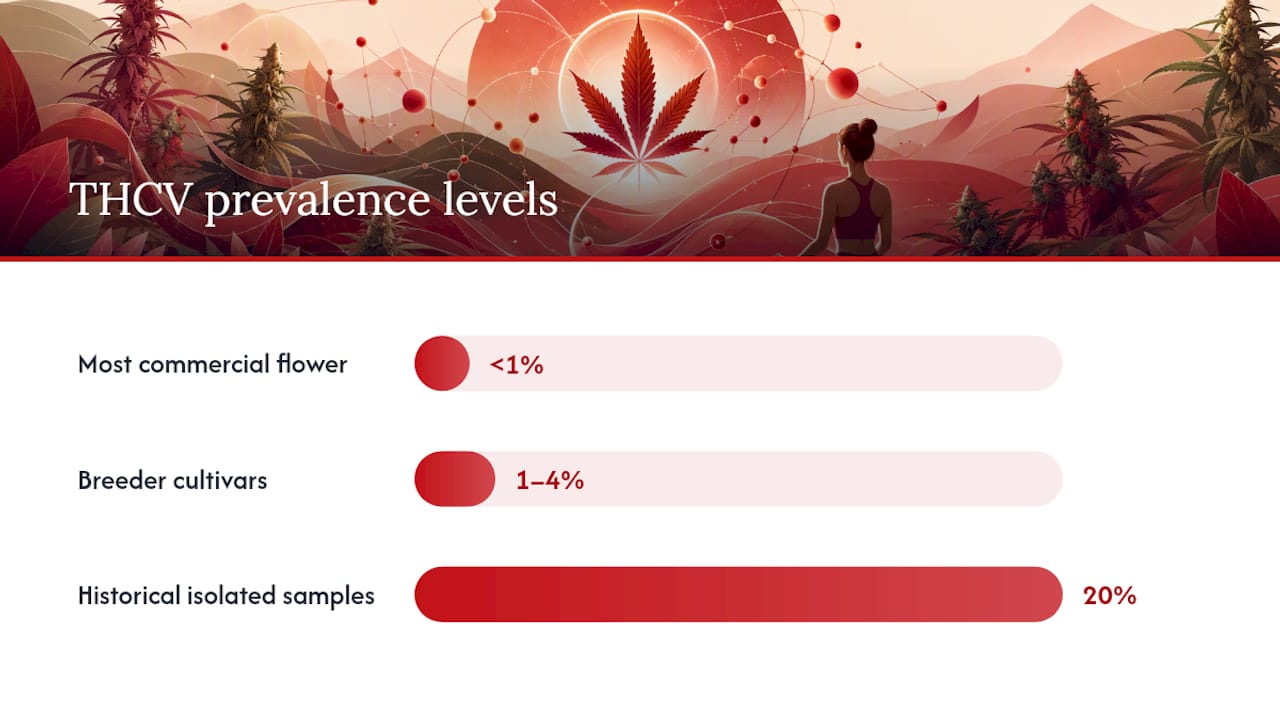
Most cannabis contains only trace THCV. It's a minor cannabinoid in the vast majority of commercial flower, typically appearing at well under 1% by dry weight. The plants that reliably produce meaningful THCV levels tend to trace back to African and Asian sativa landraces, where certain population surveys report elevated propyl cannabinoid expression compared with the pentyl-dominant genetics common in modern Western hybrids. Breeders working specifically with these lineages have pushed some cultivars into the 1% to 4% THCV range in flower, with isolates and concentrates capable of far higher concentrations.
You'll see THCV strains marketed with a cluster of recurring claims. Some are grounded, some aren't:
- The "diet weed" label is oversimplified. Early interest in THCV for appetite suppression came from limited preclinical work, not settled human evidence, and calling it a slimming aid overstates what's actually been shown.
- Energising is the more defensible claim. Consumer reports and the pharmacology consistently point to alertness and reduced sedation rather than a direct fat-loss mechanism.
- THCV rarely appears alone. Almost every THCV-forward cultivar still carries meaningful THC, so the experience is a blend, not a pure varin effect.
- Concentration claims vary wildly by source. Historical surveys have noted THCV levels as high as 20% in isolated plant analyses, though Wikipedia's summary makes clear this is far from typical, and commercial flower almost never approaches that figure.
The practical takeaway: THCV is real, its structural difference from THC is well established, and its prevalence in landrace sativas is documented. What's overstated is the certainty around its effects on appetite and metabolism, which brings us to the pharmacology itself.
How does THCV work in the body?
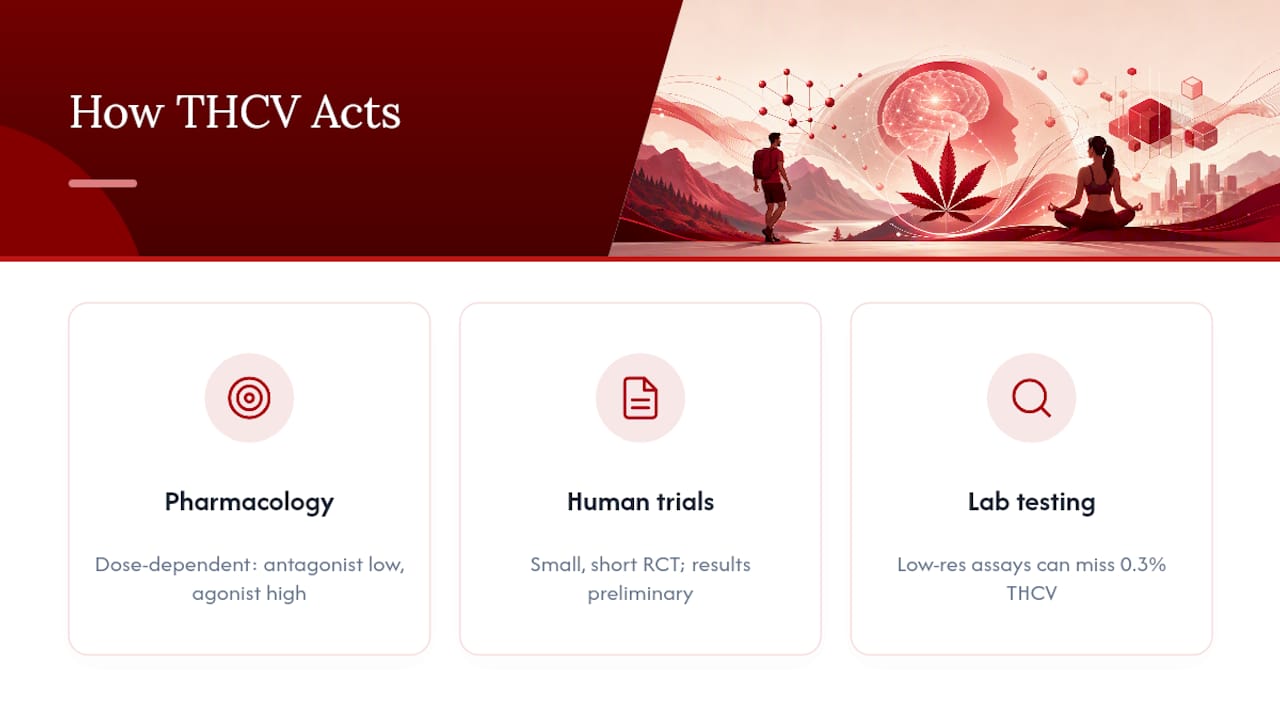
THCV's defining pharmacological trait is dose dependence at the CB1 receptor, and it cuts against how most people assume cannabinoids behave. At lower doses, THCV tends to act as a CB1 antagonist, meaning it can blunt some of the effects THC produces at that same receptor. At higher doses, the picture shifts and THCV can behave more like an agonist, according to pharmacology research on receptor interactions. This is a genuinely unusual profile among cannabinoids, and it's a large part of why THCV-heavy strains are reported to feel clearer and less foggy than THC-dominant ones, particularly at modest doses.
THCV clinical evidence, by the numbers: A randomised, placebo-controlled human trial tested a THCV formulation in people with type 2 diabetes and found modest effects on glycaemic control. The study was small and short, and the researchers themselves framed the results as preliminary rather than conclusive.
That caution matters. A 2020 review in Frontiers in Pharmacology catalogued preclinical signals for appetite suppression, neuroprotection, and metabolic effects, but stressed that clinical evidence in humans remains thin. Broader reviews of cannabinoid research echo the same gap: most trials are small, short, and difficult to generalise from. Nothing here is settled science, and any strain description that promises therapeutic outcomes is running ahead of the data.
There's a measurement problem layered on top of the pharmacology question. Labs testing THCV content have to resolve propyl cannabinoids from their pentyl cousins using chromatographic methods sensitive enough to tell THCV apart from THCVA, its acidic precursor. Analytical work on cannabinoid testing shows that low-resolution assays can under-report or misattribute THCV entirely, especially near a lab's limit of quantification. A strain genuinely producing 0.3% THCV might read as “not detected” on a less capable panel, which is one reason THCV strain reviews online are so inconsistent between growers and testers.
What effects and use cases does THCV actually deliver?
The most consistent report across THCV users is a faster, more alert onset compared with THC-dominant flower, with far less of the heavy, couch-locked sedation associated with indica-leaning strains. That said, the experience is never THCV in isolation. THC co-presence, total dose, and individual tolerance all shape how pronounced the "clear-headed" effect actually feels, and two people smoking the same batch can report meaningfully different sessions.
Three use cases come up most often among people specifically seeking out THCV genetics:
- Daytime function. Growers and buyers reach for high-THCV cultivars when they want mental clarity without the sedation that heavier indica hybrids bring.
- Creative or focused work. The alert, less-foggy quality reported with THCV strains lends itself to tasks that need sustained attention rather than a couch and a film.
- Appetite experiments. Some users try THCV specifically to test its reputation for appetite modulation, though given the thin clinical backing, this should be treated as a personal experiment rather than a reliable outcome.
Pro Tip: Start lower than you would with a familiar THC strain. THCV's dose-dependent receptor behaviour means a small amount can feel notably different from a larger one of the exact same flower, so build up gradually rather than assuming more THCV simply means "more of the same."
A few safety notes are worth stating plainly. THCV strains still contain THC, often in significant proportion, so the usual driving and impairment precautions apply without exception. If you take medication that interacts with cannabinoids, the dose-dependent CB1 activity of THCV is a reason to be more cautious, not less, since its effect profile isn't simply a weaker version of THC. And because batch-to-batch THCV content varies so much even within the same strain name, treat every new pack as its own experiment until you've seen its COA.
Notable high-THCV strains worth knowing
A handful of names come up again and again in serious THCV strain reviews, each with a distinct lineage story and a different level of consistency.
- Durban Poison. A pure African sativa landrace and probably the most widely available THCV-associated strain on the market. It typically shows THCV in the low single digits alongside moderate to high THC, with a terpinolene-forward terpene profile that reinforces the energetic, alert character it's known for.
- Doug's Varin. Bred specifically to push THCV expression higher than typical landraces achieve, this cultivar is a favourite among phenohunters chasing verified varin genetics. Availability is limited and phenotype expression can swing considerably between seed batches, so pedigree documentation matters more here than with most strains.
- Pink Boost Goddess. Descended from Jamaican Lambsbread genetics, this one carries a reputation for elevated THCV alongside a distinct floral, fruity terpene signature that sets it apart from the typical sativa aroma profile.
- Pineapple Purps. A less common varin-associated cross, generally harder to source reliably and more variable in reported THCV percentage across different seed lines and growers.
- Red Congolese. An African landrace lineage similar in spirit to Durban Poison, often cited in THCV breeding programmes as a source plant for propyl cannabinoid expression.
- Malawi Gold and Swazi Gold. Both are classic African landrace sativas from regions where elevated THCV expression has been documented in population surveys, making them foundational genetics for many modern varin-focused breeding projects rather than finished consumer products in their own right.
The common thread across all seven is availability inconsistency. Landrace and varin-specific genetics simply aren't grown at the volume of commercial THC hybrids, and even within a named strain, THCV content can shift noticeably from one seed run to the next. Treat every strain name here as a starting point for research, never as a guarantee, and always ask for a current batch COA before assuming a pack will deliver the percentages its name implies.
How do you verify a THCV product is genuine?
Reading a COA properly is the single most useful skill for anyone shopping THCV strains, and it takes about five minutes once you know what to look for.
- Find the THCV and THCVA lines separately. A trustworthy COA reports both, since THCVA is the acidic precursor that converts to THCV on decarboxylation, and labs that only show a combined "total THCV" figure are giving you less information than they should.
- Check the assay method. Look for chromatographic testing capable of resolving propyl cannabinoids from pentyl analogues, as analytical research on cannabinoid measurement confirms that lower-resolution methods can miss or misreport THCV entirely.
- Confirm batch matching. The COA should correspond to the exact batch number on your packaging, not a generic reference test run months earlier on a different harvest.
- Ask about lab accreditation. A COA from an unaccredited or unnamed lab is worth very little; reputable testing facilities are usually happy to have their credentials checked.
- Request breeder pedigree. Ask what parent genetics went into the strain and whether the breeder ran a phenohunt to confirm THCV expression before release, since strain names alone are a poor predictor of actual cannabinoid content.
Why THCV percentages vary so much between COAs: because most flower sits near the lower limit of quantification for THCV, small differences in assay sensitivity between labs can produce meaningfully different readings on genetically identical material.
If consistent dosing matters more to you than flower's fuller sensory experience, concentrates or isolates are often the more reliable route, since flower's natural variability makes isolates the practical choice for anyone who needs a predictable THCV dose. The trade-off is real: isolating THCV strips away the wider cannabinoid and terpene entourage that many people credit for shaping the overall effect.
Which formats and doses make sense for THCV beginners?
Flower, concentrates, vapes and tinctures each deliver THCV differently, and the format you choose matters almost as much as the strain you pick.
- Flower offers the fullest terpene and cannabinoid entourage but the least predictable THCV dose, since content shifts between plants, harvests, and even branches on the same plant.
- Concentrates and isolates give you a known THCV percentage per dose, making them the more reliable option if consistency is your priority over the whole-plant experience.
- Vapes sit somewhere in between, offering faster onset than edibles with somewhat more dosing control than raw flower, provided the product carries a current COA.
- Tinctures allow for fine, incremental dosing and are worth considering for anyone specifically trying to microdose THCV to observe its effects without committing to a full session.
If you're new to THCV, start small regardless of format. A microdose approach, noting how much THC is co-present in whatever you're using, lets you separate THCV's distinct effects from the more familiar THC experience layered on top. Onset with inhaled formats tends to arrive faster than with THC-only flower, though duration and intensity still depend heavily on your personal tolerance and the specific batch's full cannabinoid profile. Plan sessions with that variability in mind rather than assuming a repeat purchase will feel identical to the last one.
What terpenes should you look for in THCV strains?
Terpene profile is often a faster clue to a strain's likely effect than the cannabinoid panel alone, and THCV-forward cultivars tend to share a recognisable pattern. Terpinolene is the terpene most consistently associated with THCV expression, and its presence is a big part of why so many varin strains carry a bright, almost herbal-citrus edge rather than the heavier musk of indica-leaning genetics. Terpene research on aroma contributions backs this pattern, and strain guides tracking THCV cultivars consistently note terpinolene as the anchor note across the category.
Ocimene and pinene frequently appear alongside terpinolene in these lines, rounding out the profile with sweet, herbaceous, and pine-forward notes that reinforce the energetic character rather than working against it. When you're comparing two THCV strains, cross-reference the terpene panel against the cannabinoid figures. A high THCV reading paired with a heavy myrcene presence, for instance, is a slightly unusual combination worth double-checking, since myrcene is more typically associated with sedating indica profiles.
Storage matters here more than people expect. Terpenes degrade with heat, light, and air exposure faster than cannabinoids do, so a THCV strain that tested beautifully on the COA can lose much of its aromatic character within weeks if stored carelessly. Airtight, dark, cool storage preserves the terpene profile that's doing real work in shaping how the THCV experience actually feels.
Scousegenetics' approach to varin genetics and seed provenance
Verified pedigree is the difference between a strain name and an actual THCV outcome, which is why Scousegenetics builds its seed lines around phenohunting rather than marketing labels alone. Every line goes through germination testing before it's offered for sale, and the business publishes honest mould ratings rather than smoothing over batch inconsistencies that growers would otherwise discover too late.
For collectors and hobby growers specifically chasing varin traits, that provenance work matters more than it does for standard THC hybrids. THCV expression is unusually sensitive to lineage, and a seed pack without documented parent genetics is a gamble regardless of what the strain name promises. Scousegenetics' germination promise means non-viable seeds get replaced, which reduces the risk of investing a growing season into a batch that never sprouts.
The business is based in Liverpool and works within the UK collectible seed market, positioning its seeds as souvenir and collector items rather than a growing service. That framing matters for anyone comparing seed banks: the value on offer here is verified genetics and transparent testing, not agronomic advice or growing outcomes the business doesn't promise.
Where THCV genuinely fits in your cannabis toolkit
THCV strains reward patience more than most cannabis categories, and that's the part conventional guides tend to skip past. If you want a genuinely alert, clear-headed daytime effect and you're prepared to treat every new pack as its own experiment, THCV genetics are worth prioritising over generic sativa hybrids marketed on vibes alone.
The consistency caveat is real: even a strain with excellent provenance can vary batch to batch, so never assume last season's COA still applies. Ask for current lab data every time you buy, and favour breeders who publish phenohunt records rather than relying on a strain name's reputation.
Ethical sourcing is the quieter issue nobody mentions enough. Landrace genetics like Malawi and Swazi carry cultural and ecological weight, and breeders who credit their origins honestly deserve your business over ones who don't.
— Lewis
Get verified varin genetics from Scousegenetics
Scousegenetics is the alternative to guesswork seed shopping for anyone chasing genuine THCV traits. Rather than trusting a strain name and hoping the batch matches its reputation, you get honest mould ratings and a germination promise on every pack, backed by phenohunting that's actually documented rather than assumed.

If you're building a collection around varin genetics specifically, the Scouse packs and Female packs are the place to start, priced at £60 and £40 per pack respectively as one-off purchases with no subscription attached. Every listing is treated as a collectible seed item under UK guidance, arriving in plain, discreet packaging. If you want to check a strain's pedigree or ask about a specific phenohunt before buying, the Scousegenetics site has a strain finder and direct contact route for exactly that kind of question. Browse the current packs and place an order when you're ready to grow something with a paper trail behind it.
This article is general information, not a substitute for advice from a qualified doctor. Consult a qualified healthcare professional about your own circumstances before acting on anything here.
Sources
- PubMed: clinical study on THCV and metabolic effects
- PubMed: THCV pharmacology and receptor interactions
- Frontiers in Pharmacology: THCV review (2020)
- NCBI PMC: analytical considerations for cannabinoids
FAQ
Which strain has the highest THCV?
Doug's Varin and certain African landraces such as Malawi Gold and Durban Poison are among the most commonly cited high-THCV genetics, though exact percentages vary significantly by batch, so always check a current COA rather than relying on the strain name alone.
What is the best THCV product?
Concentrates or isolates tend to offer the most reliable THCV dosing since they remove flower's natural variability, though many enthusiasts still prefer verified high-THCV flower, such as seeds from Scousegenetics' Scouse packs, for the fuller terpene experience.
Is THCV stronger than THCA?
They aren't directly comparable: THCA is the non-intoxicating acidic precursor to THC, while THCV is a distinct cannabinoid with its own dose-dependent receptor profile, so "stronger" depends entirely on which specific effect you're measuring.
Is THCV a sativa cannabinoid?
THCV is most commonly associated with sativa landraces from Africa and Asia, but it isn't exclusive to sativas; it's the plant's genetic pedigree, not its sativa or indica classification, that actually predicts THCV content.